
This started as a true pro/con list for each track but as I was writing, it morphed into a bit of a travel guide to each track. I covered the first three races, Daytona, Sebring, and Long Beach, in the first installment of this series, and now will be covering the next three rounds.
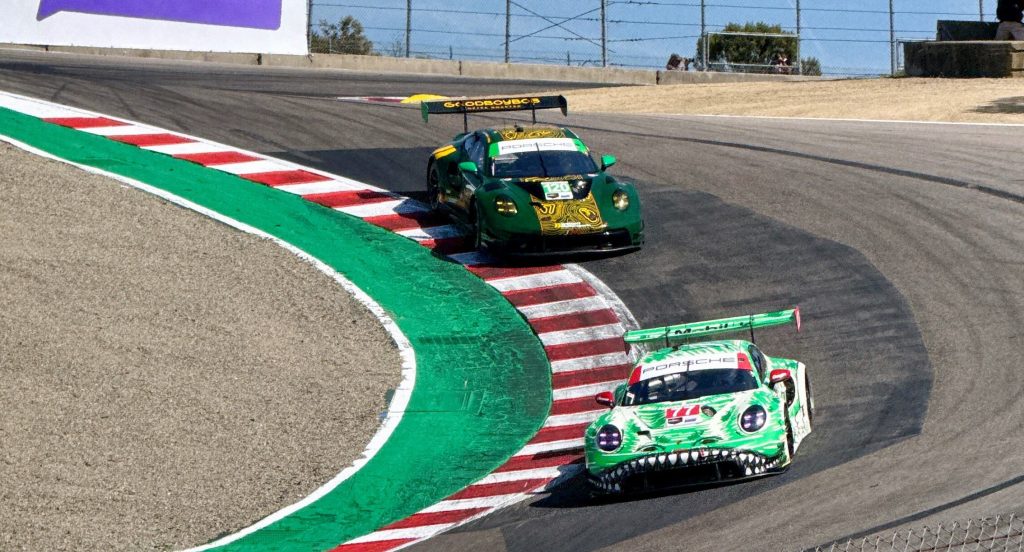
Laguna Seca
I’m not sure what the best part of Laguna Seca is, the track or the town of Monterey.
I didn’t stay in the downtown, oceanside part of Monterey but I was only a 10 minute drive away, so I was able to go easily and see the sights. I highly recommend staying in or near Monterey if you go to this race. There’s just so much good food and so many things to do and see.
Normally when I’m at a track I’m at or near the track and do all the things for the weekend at the track. Monterey changed my outlook on that and is actually where I really got the idea to write a travel guide about IMSA. My biggest recommendation for the weekend is just go, park, and walk around. You can walk on a path along the water, you can walk through the downtown area (it’s really small so it won’t take long), you can go in the shops, or the restaurants along the water or on the pier. Basically endless possibilities.
As far as the track and the race itself, I don’t think enough people say how Laguna Seca is basically on the top of a small mountain. The access road to the track is wild! And once you get there the track itself is another small mountain. Walking up to the corkscrew from the paddock is not an easy task but it is very much worth it. I try to walk the entirety of the track at every track I go to and Laguna makes that pretty easy since there’s a path along the track pretty much the whole way. I was able to just walk along this during practice and pause to take pictures anywhere I wanted.
The paddock was sort of like Daytona where the cars are in physical garages and the trucks are across the road from them. Compared to Sebring and Long Beach’s paddocks it’s much closer to the action and much easier to see cars on track with only a short walk.
As far as getting to the track/to Monterey went, I flew into San Francisco and rented a car. Because everything was a bit far away, I felt like a rental was needed. This is the first race on the calendar that I think this is true. Monterey is close to the track but it is still around a 20 minute drive without traffic, so I wouldn’t want to be having to do that in an Uber all the time.
I got some sort of preferred parking at the track and I’m not sure what the difference was, but it wasn’t super expensive and was close to the paddock and the food so it seemed worth it.
On the topic of food, the options at the track were extremely limited, so if you’re the kind of person who doesn’t mind packing a sandwich, or just eating snacks all day, that might be a good idea for this one.
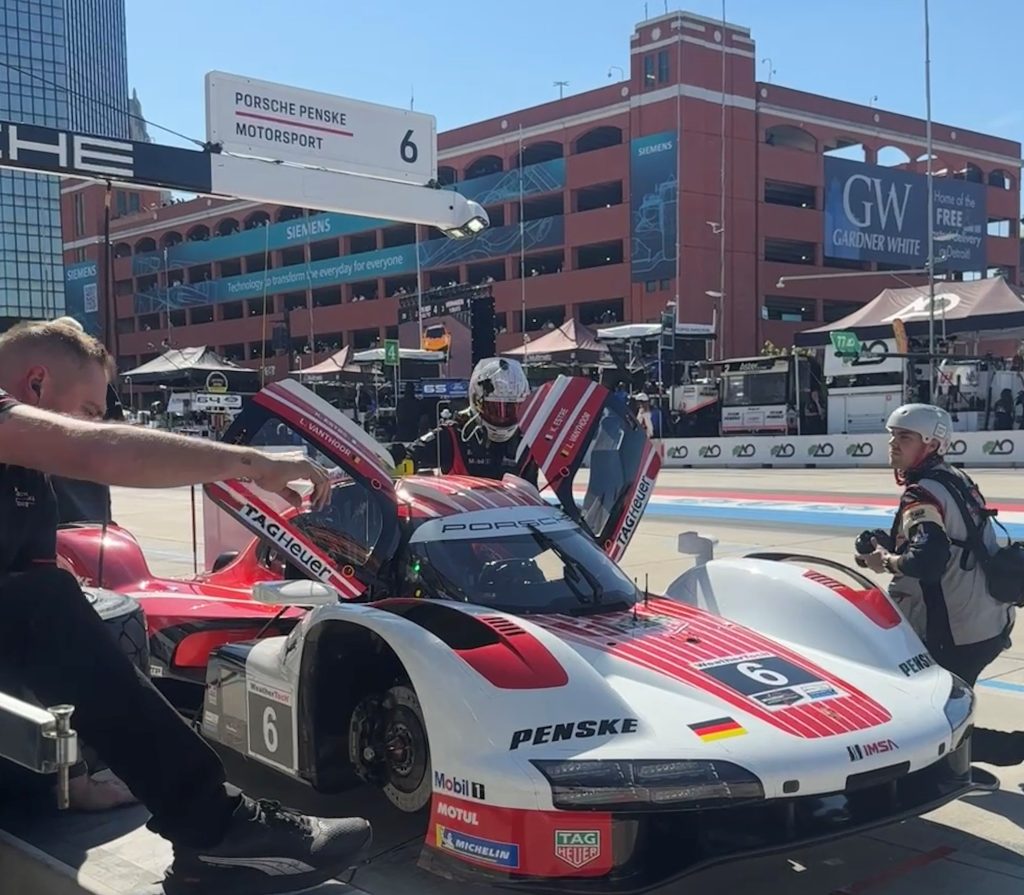
Detroit
It’s really hard for me to write on Detroit, as the only times I’ve gone I’ve stayed in the home of friends so I can’t say what the hotel situation is. As far as travel within Detroit, it is a major city and has public transportation and many parking garages. Parking garages which you’re familiar with if you’ve seen the race, but also parking garages that are a short ride away on the People Mover.
The People Mover might be my favorite thing about Detroit. It is an elevated train that makes a loop around downtown. It goes from the track itself, to the places like Greektown and Bricktown where you can go to a restaurant, and then back to the track. While in Detroit, my friends and I used the People Mover to get from our parking garage to the track, and then from the track to lunch and then later to dinner. More than just about any other track, the city of Detroit feels like the race is part of the downtown. Yes, Long Beach is more a celebration of motorsport, but Detroit is a large city with a large city feel, despite not being much larger than Long Beach.
When it comes to the track itself, Detroit has what I consider the best paddock of the whole season. One side is IndyCar and one side is IMSA and there are cars, drivers, and teams everywhere. With the purchase of a grandstand ticket, you can get access to the paddock, and with an IndyCar Nation credential you can even get into the pit lane, behind the pit stands of course. I spent IMSA qualifying right beside the PPM pit stands.
Walking the full track is pretty difficult at Detroit, the same way it is at Long Beach, but while you walk along the back straight, you get really cool views of the waterfront, and Canada across the way. Detroit has a very different vibe overall than Long Beach, despite them both being joint IndyCar weekends at street tracks. In some ways Long Beach feels more like an IndyCar event and Detroit feels more like an IMSA event. At both weekends, IMSA runs Friday and Saturday and IndyCar runs the full weekend.
Something that I did a lot of in Detroit, and something that people who either listen to the podcast, follow me online, or read the series about attending every GTP race are familiar with, is getting coffee, and accidentally running into Kévin Estre and Laurens Vanthoor at a coffee shop. There is just a lot of great coffee in and around downtown Detroit.
One thing that is VERY different at Detroit than at just about any other IMSA race is how the autograph session is done. It was different in 2026 than it was in 2025, but I would guess the 2026 way is the new way forward. The autograph session for IMSA was done in the IndyCar style, where the field was divided in half and you had to pick one line or the other to go through. This was ok for me because I was going to every round and would see almost all of these drivers many more times, but it is something to consider if Detroit is the only round you plan to attend. But as with every IMSA race, drivers are easily accessible in the paddock.
I think overall Detroit is the most accessible IMSA race. If you plan it right, you won’t need a car the whole weekend, since Detroit is a major airport and the city has abundant public transportation options.
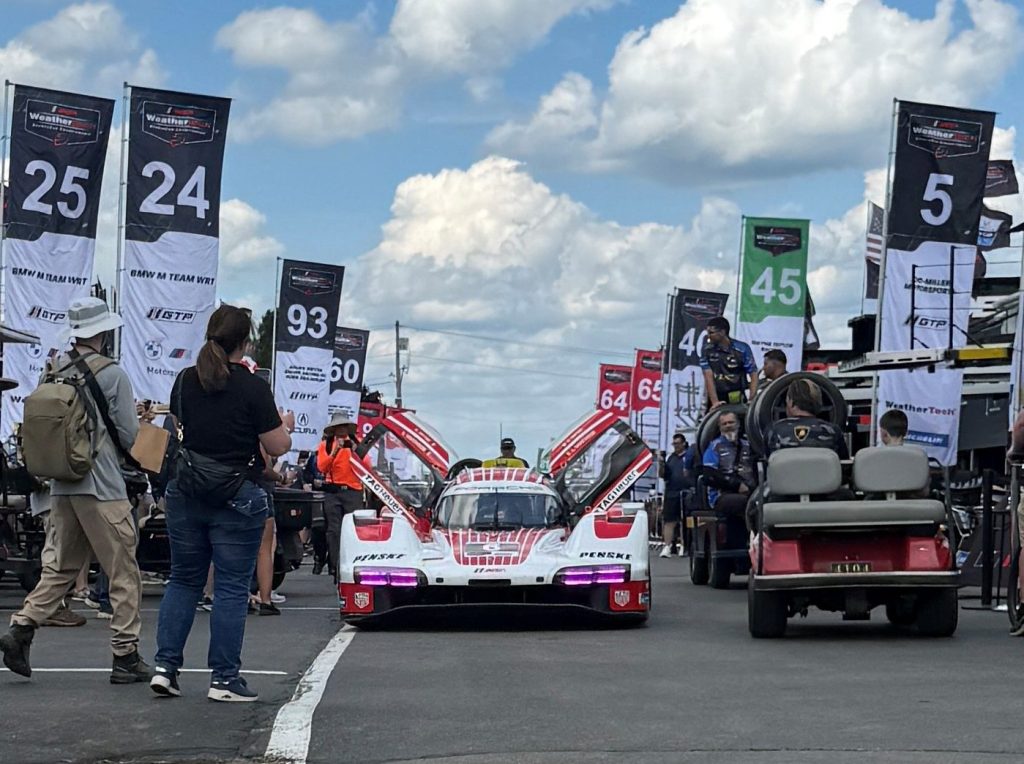
Watkins Glen
Watkins Glen was the first 6 hour race of the season and came off the back of 2 of the last 3 races being tiny 100 minute ones, so I needed to do a mental reset back to the beginning of the season and the true endurance style of attending a race.
I went to Watkins with my dad and we stayed in a little hotel in the middle of downtown. But downtown Watkins Glen isn’t like downtown Detroit, downtown Long Beach, or even downtown Monterey. It is a tiny little town with mom and pop restaurants, and only a few stoplights. But it had a great racing vibe to it. The crosswalks were checkered flags and most of the restaurants had stuff going on for the race weekend.
The weekend starts off, like a lot of the IMSA weekends with a little welcome event. This one was at the Seneca Lodge, which looks like a set out of “Dirty Dancing.” The Lodge itself is a temple of motorsport, and each piece of racing memorabilia tells a story. The welcome event wasn’t the best of all of them, only a small Q&A session and autograph session with a few teams. But these welcome events are a must-do in my opinion.
Since it is “Sahlen’s Six Hours of the Glen” there are obviously hot dog stands. I didn’t get any hot dogs, but there was other food available. One of the campgrounds even had a general store, which is pretty unique for an IMSA race.
The paddock at Watkins was what I would call a pretty standard IMSA paddock, though something that caught my attention was the support series using the permanent garages and the main series using the tents and trailers method. I think it is because of how open the permanent garages are, and the fact that there wouldn’t be much separation between teams and cars. The autograph session was at the garages, and as with other rounds, pick your long line (be it your GTP team or AO Racing) first and then go to the other lines after. Once again I think I was able to make it to all the teams except AO racing during the session.
Going back to an endurance format meant that there was a lot of time to walk around during the race, and I made sure to make the most of it. I walked the entire perimeter of the track, including the boot, though my dad took a break in the car for that. Watkins does probably the best job of the endurance road courses (Sebring, Watkins, Road America, and Road Atlanta) at having grandstands. So if you like to sit and watch a single corner for a while and then move to another, that is a great option.
Watkins Glen is a track and a town that you will absolutely need a car for. The track is not very close to any major airports, and the town is sort of in the middle of nowhere. The track is also a 15 minute drive with no traffic from downtown on roads with no sidewalks. Definitely not somewhere you can walk to the track.
This is the second part in a three part “travel guide” series about the IMSA GTP rounds.


Leave a Reply