I attended every GTP round in the 2026 IMSA season. Throughout the year, and since the season ended, I’ve received so many questions about each race, and which races I think people should attend. The previous two articles covered the first 6 rounds of the season, this one is the final 3: Road America, Indianapolis, and Petit Le Mans.
Road America
Road America probably has the biggest list of “you need to do this when you’re there” items of any race on the calendar.
Starting with the Welcome Party at Siebkens in Elkhart Lake. It’s the Thursday before the weekend starts and it’s truly a party. The drivers are celebrity bartenders raising money for charity. If you find the right one (in my case it was Ben Barnicoat) you can get them to chug a beer for charity too. A lot of the big names across all 4 classes show up to bartend at this event, so it’s a great way to see drivers in a more casual setting.
The second must do is getting breakfast at Off The Rail, also in Elkhart Lake, and bringing a racing sticker to put up on their bar or door frame. It’s a little breakfast joint right in the middle of town, and it’s not a secret at all, so expect a bit of a wait. If the weather is good they have a pretty big patio.
The third must do is walking around Elkhart Lake itself, something nice to do in the evening after action at the track has wrapped up. There are shops, ice cream places, candy shops, and it’s just a great vibe. You can also walk down by the Osthoff Hotel and Siebkens and by the lake itself.
Finally at the track, there are a few more must do things. The main one is walking around the track on what I can only describe as a nature trail. It’s a dirt path through the trees and while you feel like you’re in a park, racecars are blasting past just through the trees on the track. It’s very clear while you’re doing this why they call Road America “America’s National Park of Speed.”
A second must do at the track is trying as much of the food as you can! Road America has the best concessions by far. It’s really not even close. There’s a main concession stand near the paddock that has a massive selection of food, drinks, and ice cream. It will look busy, but it moves fast.
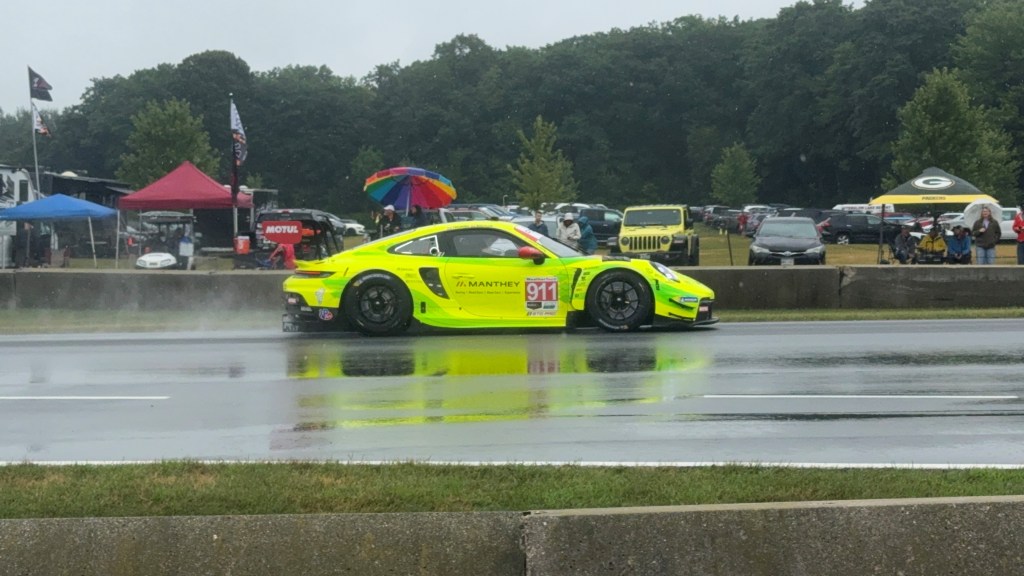
The Road America paddock is without a doubt my least favorite of any of the rounds. It felt like the spokes of a wheel or a spiderweb, and it was not easy to get around or remember where certain garages were. This definitely made going around for the autograph session a little more difficult because there was just so much ground to cover. It’s one of the few races that I did not make it to every car. That being said, if you stand at the traffic circle, you can watch all the cars come through before every session as they make their way to pit lane. This made for some pretty cool photos in the wet.
Road America probably has one of the most accessible podiums of the year, so if your driver doesn’t crash from a podium position with 8 minutes left to go in the race, you can get really close to watch the podium. If you’ve been to Sebring or Laguna Seca, it’s much the same setup, but there were fewer people.
Indianapolis
The Indianapolis Motor Speedway is a must attend venue. But you’re probably thinking for the Indy 500 and not Battle on the Bricks. Truth be told, Indianapolis is a bit of a weird one, and I go back and forth almost daily on my overall takeaway of the race weekend.
Indianapolis itself is a great city, there are hundreds if not thousands of travel guides for the city centered around either the major sports teams or the Indy 500. I am not trying to recreate those, but I do need to talk about downtown.
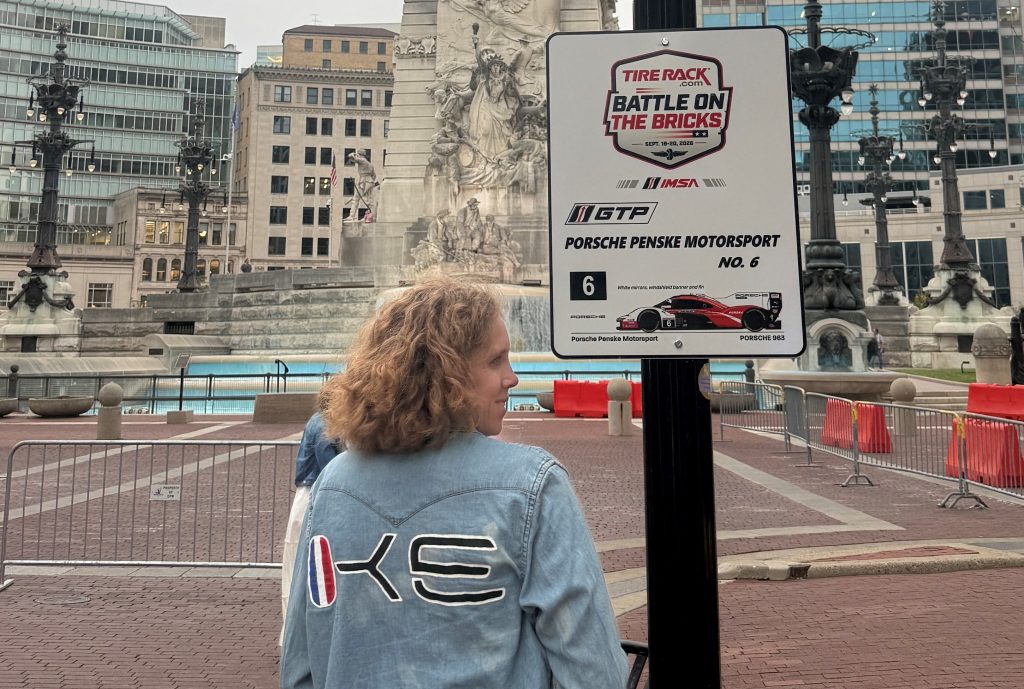
Downtown Indianapolis is a great, walkable city, and one of only three “big” cities on the IMSA calendar, along with Long Beach and Detroit. If you stay downtown you’re less than 20 minutes from the Speedway, but have all the expected amenities of a city. The city also makes downtown a draw, not to the extent of the 500 with the parade through the streets, but they do put up signs for the cars, that you can find on a map and take photos with. Most of them are centered around the Soldiers and Sailors Monument in the center of downtown. If you have some spare time, walking around to find all the signs is a great idea and a good time.
Like many races, Indianapolis has a welcome party for the weekend with drivers appearances, a car show, and autograph sessions. Downtown Speedway (which is actually a separate town from Indianapolis proper and is where the track is) basically shuts down and turns into an IMSA party. All of the bars and restaurants along Main Street stay open during the party, so if you get there early you can grab a late lunch and then watch the driver Q&A’s and line up for the autograph session. This event had one of the bigger autograph sessions of the year, not full field but pretty close. And after it was over most of the drivers stuck around to hang out with fans.
When you are at the track, the IMS Museum is really worth the time and money to check out. It’s a rotating collection that has the entire history of the track, as well as special exhibits. When I was there they had a Jeff Gordon exhibit going, so I got to see a ton of his cars and helmets.
Obviously IMS is one of the most storied racetracks in the world, and that makes it worth going to. But when you go to a venue designed to have 300,000+ people in attendance on a single day in May, a much smaller crowd makes the place feel empty. And that’s not to say there weren’t a lot of people at the race. Autograph session lines seemed similar to most other rounds. But the sheer enormity of the Speedway just makes you feel small.
The paddock is a bit disjointed, as it uses the garages that are built into the front stretch, and the standalone garages by Gasoline Alley instead of the familiar truck and tent format. And unlike at Laguna Seca and Daytona, where the trucks are nearby, they are in a completely different section of the paddock than the garages.
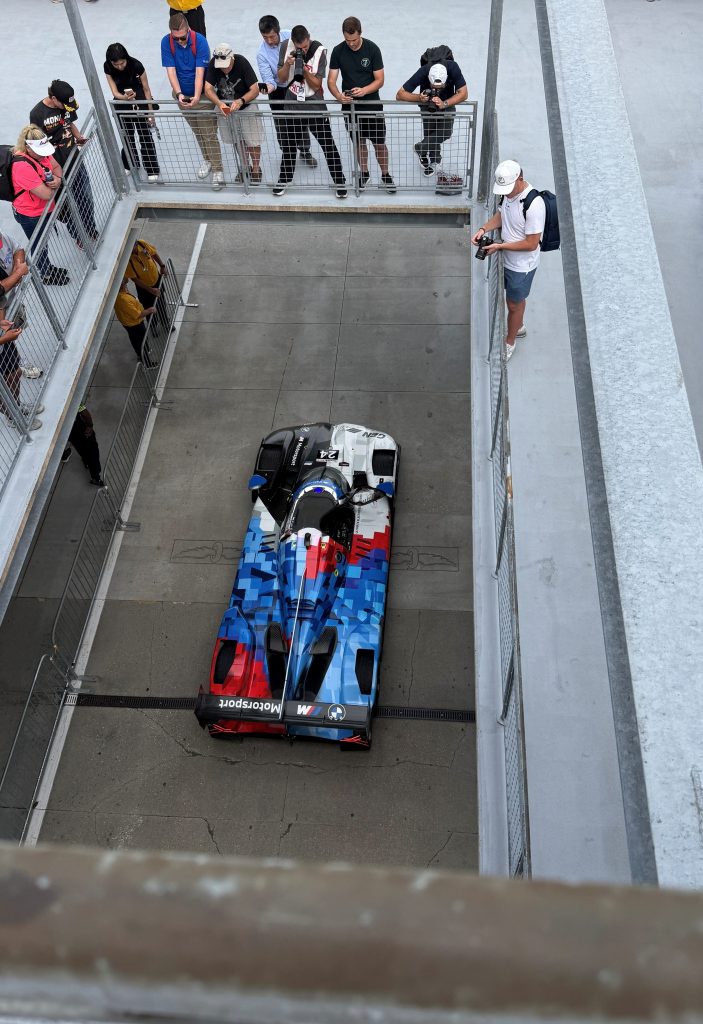
One thing to absolutely be sure you do at the Speedway is watch the cars come back down Gasoline Alley from the track after the sessions end, and to watch it from above. The stands above the pits have an opening over Gasoline Alley where you can look directly down on the cars as they come through. Those are some of my favorite photos from the whole year. Additionally, there is an amazing angle at the end of the paddock, where all the cars line up before they are released into the pits, and you can get the cars driving by with the famous Pagoda in the background.
The podium at IMS is a little strange because there is no real great way to see it. You are either across the track in the stands, or you are beside or below it. I chose to be below it because the drivers walk up the steps on the side to get to the podium so it is an opportunity to see them up close, and after waiting since Long Beach for another podium, I wanted to see them up close.
Petit Le Mans
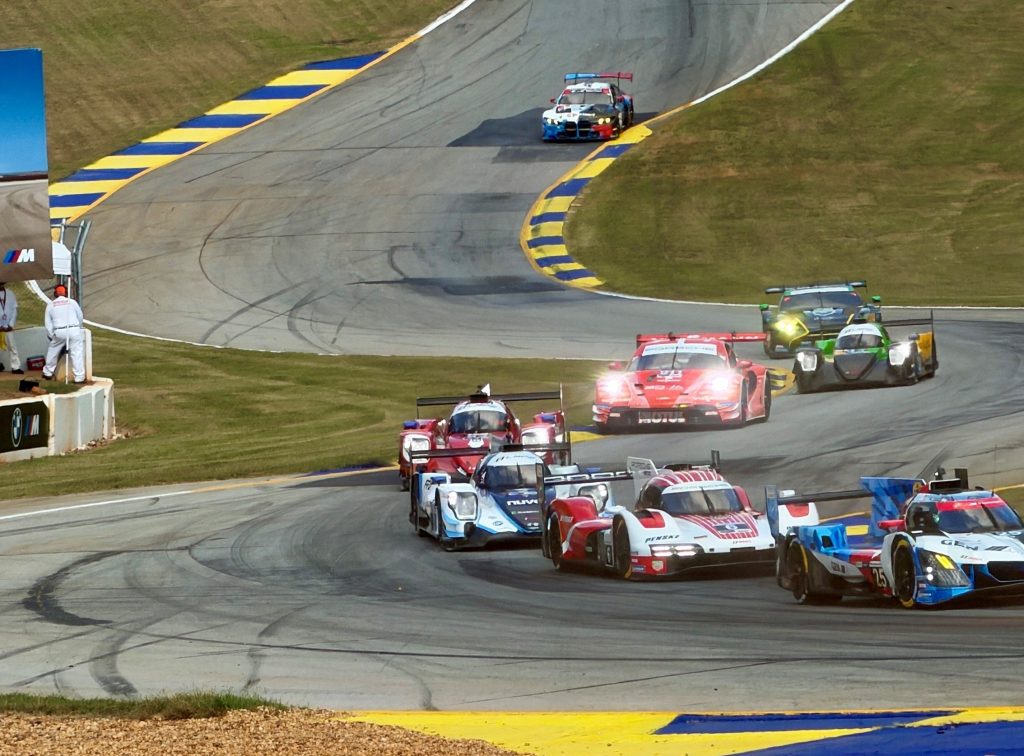
When people ask me what IMSA race they should go to, I don’t hesitate for a second before answering “Petit.”
I tell everyone that they should go to Petit because it’s the best, but I’m not sure it actually does any one thing the best. Daytona and Indy are bigger and you can see more, Sebring is a bigger party in the campground, Laguna is hillier, Long Beach, Detroit, and Indy are in civilization, Watkins and Road America might be prettier scenery.
But Petit Le Mans combines everything better than every other track. Petit Le Mans is the most enjoyable race to me on the calendar. The track is amazing, the paddock is easy, the camping is not too wild, you can get right up along the fence and get photos in the same places as photographers.
The ability to stand at spectator hill and get photos of cars coming through the esses, or to stand at turn one and see pit out and cars flying through that turn is just incredible. That is not to say that other tracks do not offer up close opportunities to see the cars on track, it’s just that Petit does it a little better. The amphitheater-like seating at turn 10 is really unlike any other viewing area on the calendar.
Road Atlanta is a track like Road America and Watkins Glen where you should really just plan some time to walk around during practice and see what you can see. I have my places that I like to watch, but everyone else might have somewhere else that they like more. That is the sheer beauty of these tracks, they are sprawling and give so many opportunities to view different things.
The only downside is you are sort of confined to the track. They might call it Road Atlanta, but Braselton, GA is not Atlanta. In fact it is an hour from Atlanta. So make sure your plans are not “stay in Atlanta and go to the track every day” unless you want a LOT of commuting.
Something to consider if you want to spend a lot of time in the paddock at Petit is that the food and fan zone is up a pretty sizeable hill from the paddock, so prepare to climb up it when you get hungry. The way the paddock is set down from the rest of the track makes it feel like you are in a bit of a separate world when you are down there.
If your team or driver is going to be on the podium at Petit, and especially if they have won the race overall, there is a BIG decision to be made at the end if you want to see it. You can choose to go up into the stands and be a bit further away but have a better overall view of the car coming in and the drivers celebrating, or you can be ground level and see the podium up close but be trapped behind a lot of photographers for the car coming in. I am still not 100% sure I made the right decision this year to be ground level. I love my podium photos, but I do wish I had more of the drivers celebrating with the car.
This is the final part in a three part “travel guide” series about the IMSA GTP rounds.
Obviously this was not meant to be an objective guide to every city that IMSA races at, or every track, but rather an expanded view of my personal pros and cons to attending each race, combined with some travel tips.


Leave a Reply